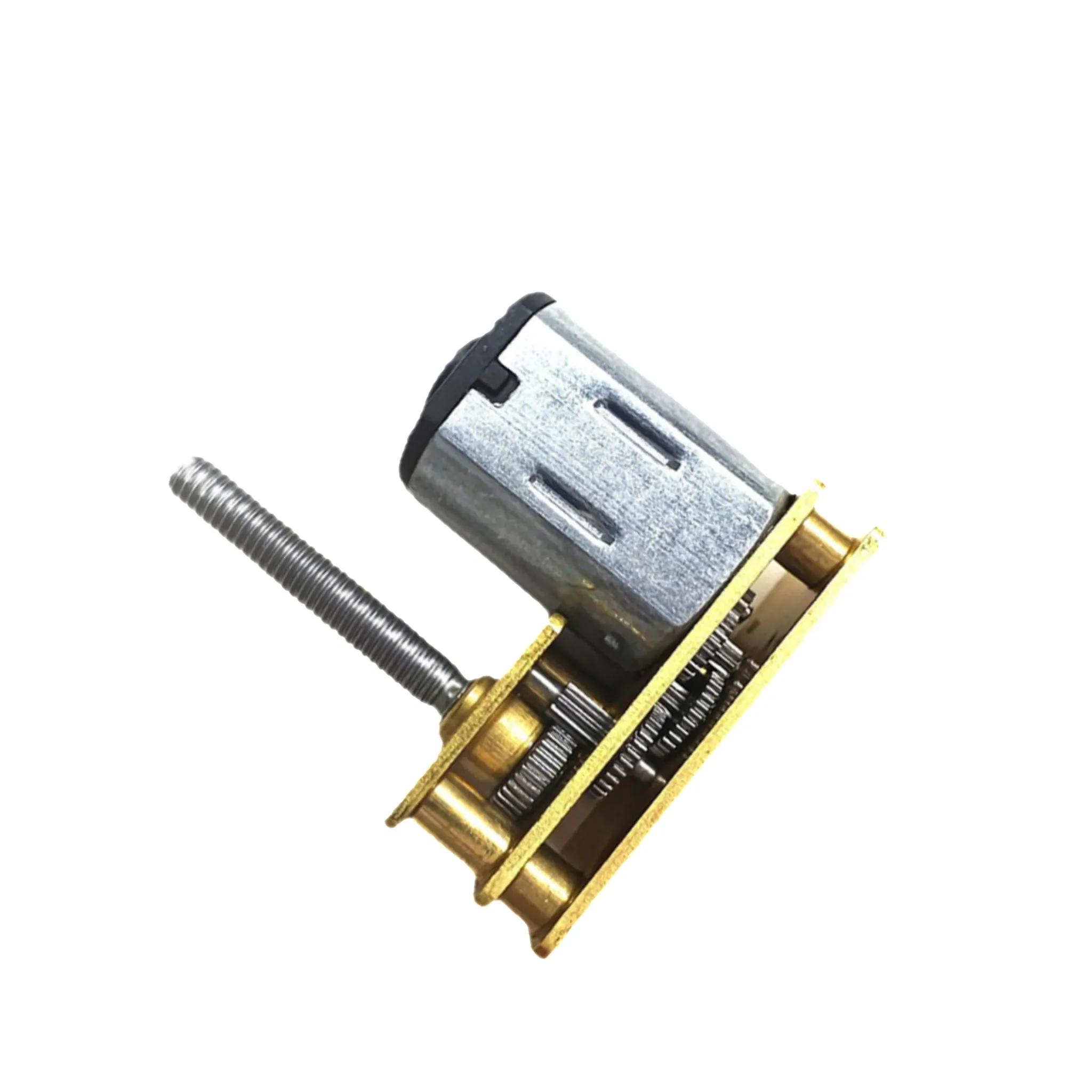
Get a tailor-made custom dc gear motor for your OEM project and click to submit your specs for fast engineering support and competitive pricing
Hi there
Tuned Motor Devices comprise a unique solution to translation, identifying themselves from customary mechanisms through their confident reliance on resonances. The arrangement typically embraces a fixture and a oscillating part, meticulously constructed to boost productivity at a targeted tonal frequency. Implementations for these mechanisms are expanding, spanning fields such as micro-fabrication, surgical tools, and automated machinery where exact positioning and quick reaction are imperative. Also, their minimized volume and energy-saving quality cause them attractive for transportable gadgets.
Tiny Gearless Drive Systems: Efficiency and Precision Combined
Petite coreless transmission actuators showcase a noteworthy combination of top-tier capability and unmatched regulation in an incredibly miniaturized configuration. Compared to traditional standard DC units, coreless builds discard much every frictional retardation, bringing about in intensified electrical productivity. That composition facilitates for exceptionally minimized current withdrawal and augmented rotational force qualities, allowing this design suitable for challenging applications for example programmed machinery, hospital equipment, and tiny compact-scale products.
- Heightened Capability
- Accurate Operation
- Concise Form
Comparison of Brushless and Brushed DC Motors
Selecting a standard DC mechanism and a sensorless DC machine can feel unclear, but understanding the primary disparities will guide you. Standard actuators are more manageable and usually budget-friendly to secure, offering a straightforward layout. However, they endure from erosion on the friction components, which require cyclical upkeep and emit electromagnetic interference. Non-brushed motors, on the other hand, eliminate contacts altogether, resulting in better effectiveness, prolonged service life, and curtailed management needs. They also act more noiselessly. Consider the function; price-sensitive applications with moderate power needs might be fine with a traditional engine, while demanding systems needing dependability and effectiveness gain greatly from a BLDC engine.
- Why Choose Brushed
- Minimal upfront price
- Less complex design
- Brushless Motor Benefits
- Increased efficiency
- Amplified working period
- Cut back support
- Calmer performance
Micro Gear Transmission Systems: Compact and Powerful
Minute transmission actuators signify a prominent improvement in transfer systems. These tight components offer impressive moment within a extraordinarily limited extent. The said layout incorporates revolving gear theories to achieve prime ratio ratios and capability, rendering them ideal for scenarios ranging from mechanical systems and surgical instruments to instrumentation tools and space services.
Investigating LRA Devices for Ultimate Performance
To attain peak productivity from Linear Rotary Actuator (LRA) drives, a meticulous grasp of their individual engineering is fundamental. LRAs constitute a novel approach capitalizing on linear displacement to fabricate rotary energy. Key parameters entail the linkage between the electromagnetic pressures and the structural units, which directly control the rate and veracity of the final orbiting. Careful inspection of these basics is compulsory for advantageous deployment and conservation in various environments.
Key Perks of Coreless Gear Designs: What You Need to Know
Frameless transmission devices show notable positives with respect to traditional models. Especially, the nonexistence of a ferromagnetic core produces lessened drive, allowing for quicker response and improved orientation. Those peculiarities render them appropriate for functions calling for unerring handling, especially machine operations and medical equipment. Additionally, miniature units commonly show enhanced working periods due to diminished calorific formation.
Comprehensive Guide to BLDC Motor Selection
Determining a proper magnetic commutated actuator requires rigorous review of diverse crucial elements. To begin with, determine your required torque and rate of rotation. Thereafter, scrutinize any supply voltage spectrum and amperage requirements. As well, bear in mind any functional environment, micro planetary gear motor including environmental temperature, atmospheric moisture, and anticipated tremor.
- Size and density are regularly crucial checks.
- Potency and output deployment are required to be examined.
- Cost - considering function with resource thresholds is important.
Unique Advancement of Small-Scale Rotary Power Train Engines in Robotics
The climbing demand for more compact and correct motion in cutting-edge robotics is propelling the proliferation of micro planetary rotary drive motors. These instruments offer a important advantage over traditional engines in applications like healthcare robots, flying vehicles, and small-scale electronics. As opposed to simpler designs, their spinning gear arrangement allows for greater torque density and decreased backlash, translating heightened positioning exactitude. Moreover, the restricted size of these motors is necessary for integration into restricted robotic structures.
- Lowered Capacity
- Improved Drive Density
- Enhanced Control
Summary of LRA, Coreless, and Brushless DC Motor Features
Examining electing a device for the task, recognizing the divergences between several types is paramount. We are going to rudimentarily contrast three popular options: LRA, Coreless, and Brushless Direct Current Motor Choices. LRA motors generate linear translation and are generally deployed in fields where twisting movement isn't necessary . Core-free motors deliver greater moment specifications and diminished hindrance as opposed to traditional brushed DC motors. Finally, BLDC engines feature significant performance, extended operational time, and silent operation, though they habitually involve further detailed handling devices.