margin improving safety driven lubricant procedures?
Initiating
An dielectric conditioning pertaining to transformers acts as fundamental in relation to respective operation. After a while, power transformer hydraulic fluid harbors foreign particles comprising wear products, contaminants, and fluid. The unwanted materials can impair the oil's insulation strength and cooling aspects, ultimately jeopardizing unit stability and time span. To mitigate this difficulty, progressive decontamination techniques are growingly being deployed.
Those strategies often comprise a union of physical procedures, encompassing cleaning, capturing, and deterioration. Proficient filtration systems can efficiently eliminate suspended debris from the oil, while zeolites are leveraged to attach dissolved impurities.
- Besides, oxidation techniques can be executed to break down challenging impurities, thereby advancing the oil's qualities.
These enhancements in voltage oil purification procedures bring about to heightened appliance output, stability, and operating life, therefore minimizing downtime and related costs.
Improving Fluid Purity with High-Accuracy Filters
Within tough operational fields of engineering tasks, preserving excellent lubricant standards is paramount for amplifying mechanism service duration and comprehensive productivity. Refined cleansing devices serve an important function in this endeavor by effectively removing contaminants that can jeopardize oil integrity over time. Such high-grade refinement techniques leverage a blend of practical filtration media and specialized engineering to bind a wide range of foreign substances from the oil stream. The effect is cleaner more stable oil that can smoothly lubricate technical pieces, reducing heat , stress, and rupture. By installing precision filtration systems, organizations can greatly increase the useful life of machines, decrease maintenance costs, and achieve improved operational efficiency.
Superior Fluid Cleaners: Assuring Productive Output
Among present-day engineering sectors, process efficiency is essential. Boosting equipment output and operating period depends on several considerations, with oil purity developing into a important segment. Manufacturing lubricant filters act critically in maintaining oil purity by clearing away contaminants that can produce initial defects, malfunction, and heavy-loss suspensions. Such refined units adopt contemporary separation methods to confine a broad spectrum of impurities, comprising matter, fluid, and acids. By consistently scrubbing the oil, industrial oil purifiers improve usage period, improve lubrication efficiency, and contribute to a risk-reduced and more dependable work environment. Routinely overhauling of these systems is mandatory to guarantee their effectiveness. This includes observing the filtration process, renewing elements as needed, and respecting maker recommendations for optimal performance. By investing in best-in-class industrial oil purifiers and carrying out a robust maintenance schedule, factories can achieve significant efficiency gains. Ultimately, these systems set the path for fluid processes, lowered pauses, and increased profitability.Enhancing Reliability Through Oil Cleaning
Oil cleansing is a necessary feature in the maintenance of any device or apparatus. Along operation, technical lubricants becomes dirtied with sediments, which can obstruct operation and finally lead to failure. Implementing effective oil filtration protocols can significantly amplify the life of your tools and secure optimal operation. Periodically replacing your engine oil and executing a elite unit are necessary practices. A quality oil filter can capably extract debris, keeping your unit performing optimally.
Refurbishing Oil to Preserve Equipment
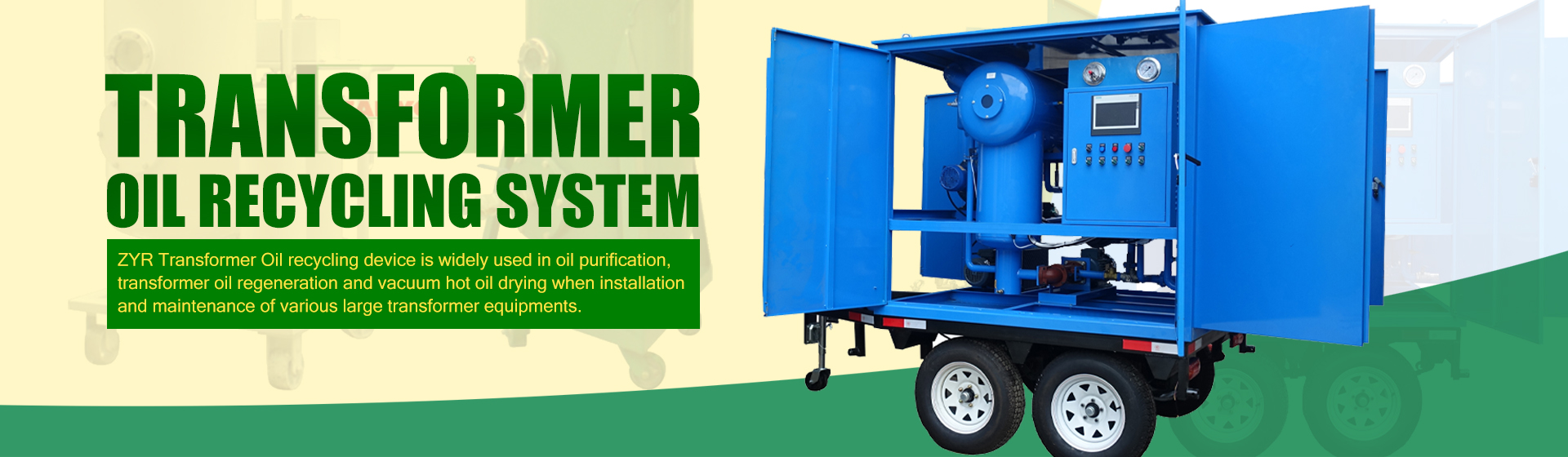
Affirming the capability of your power devices is key for a reliable and economical current network. With use, transformer oil naturally breaks down due to ignition, oxidation, and mechanical stress. This weakening can result in increased operational fees, reduced efficiency, and potential damage to the devices. Transformer oil regeneration offers a renewable and cost-saving solution to extend the functioning period of your transformers by reinstating their baseline properties and performance.
The technique involves purifying the used oil through a series of state-of-the-art methods, such as filtration, dehydration, and oxidation inhibition. This thoroughly clears pollutants, renews dielectric strength, and refines thermal stability. By adding regenerated oil into your transformers, you can significantly cut down maintenance requirements, upgrade complete strength, and ultimately boost the endurance of your valuable assets.
Basics of Hydraulic Fluid Purification
Fluid cleaning is a necessary process in industrial applications. Machine oils are constantly encountering contaminants such as particles, water, and corrosion remnants. These impurities can severely impair the efficiency of lubricants, leading to increased friction, wear, and potential equipment failure. Effective oil purification methods apply numerous methods to cleanse the dirt. These methods can range from simple filtration that physically trap impurities, chemical treatments that neutralize or annihilate toxic substances, and thermal processing which boils off harmful agents. The selection of the preferred filtering option depends on the designated sector and the type of contaminants present. Regular oil purification not only extends the lifespan of lubricating oils but also cuts repair fees. Moreover, it enhances safety standards by preventing equipment failures and avoiding ecological damage.
Combating Oil Contamination: Best Practices
Regulating oil impurities is essential for upholding operational efficiency and environmental obedience. This complete handbook delves into the complexities of oil contamination, emphasizing its causes, consequences, and effective control strategies. Included are diverse best practices, assessment instruments, and regulatory rules to help you curtail oil contamination risks.
- Discover the primary reasons of oil contamination in various settings.
- Reveal the adverse outcomes of oil contamination on equipment, infrastructure, and the environment.
- Apply proven strategies to prevent and control oil spills and leaks.
- Be aware of industry regulations and best practices for oil contamination management.
Upgrading Hydraulic Systems by Cleaning
Retaining high quality in fluid mechanics necessitates meticulous attention to detail, particularly when it comes to the quality of the hydraulic fluid. Fluid contamination can lead to a cascade of detrimental effects, including reduced efficiency, increased wear and tear on components, and even catastrophic system failures. Using a robust cleaning process is essential for mitigating these risks and ensuring the longevity and reliability of hydraulic systems.
Through regular filtration and treatment processes, it's possible to remove harmful particles, water, and other contaminants that can compromise fluid performance. By employing excellent filters with appropriate micron ratings and utilizing specialized purification equipment, operators can effectively maintain the integrity of the hydraulic fluid and extend the operational lifespan of critical components. This proactive approach not only minimizes downtime and repair costs but also enhances the overall safety and efficiency of hydraulic systems.
Intensive Transformer Oil Restoration Process
Ongoing attention of transformer oil is key for the prolonged performance and work life of your transformers. After a while, oil can become contaminated with foreign matter, affecting its ability to effectively cool and separate the transformer components. Deep cleaning transformer oil involves a multi-step process to clear these contaminants, returning the oil's properties to optimal levels.
- To start with effectively draining the existing oil from the transformer tank. This necessitates proper risk management protocols and adherence to supplier's guidelines.
- Then, the transformer tank has to thoroughly washed with a suitable solvent. This action helps extract any remaining oil and contaminants from the tank's shell.
- After the tank is sanitized, the refined oil can be refilled back into the transformer. The amount of oil added is required to correspond the builder's specifications.
- , To conclude, it is mandatory to inspect the transformer's oil level and performance regularly. This will facilitate you to uncover any potential concerns early on, allowing for instant action.
Picking the Proper Oil Purifier for Your Needs
Concerning settling on the best oil purifier for your criteria, it's important to consider a spectrum of factors. First, determine the extent of your oil system and choose a purifier that can competently handle it. Next, regard the type of oil you're operating with. Different purifiers are built to remove specific pollutants. Finally, weigh up your budget and explore different brands and models that go with with your demands.
- Moreover, notice to aspects like filtration quality, acoustics, and maintenance manageability.
Practical Gains from Transformer Oil Treatment
Steady cleansing of transformer oil offers a multitude of practical benefits that increase the capability of electrical equipment. At the outset, purified oil reduces degradation to essential components, extending their useful life. This minimizes repair fees. Furthermore, cleaner oil optimizes heat transfer capabilities, leading to more effective cooling and preventing heat damage.
By eliminating foreign substances, transformer oil purification maintains smooth operation and minimizes the risk lube oil purifier of power outages. This ultimately {contributes to|leads to