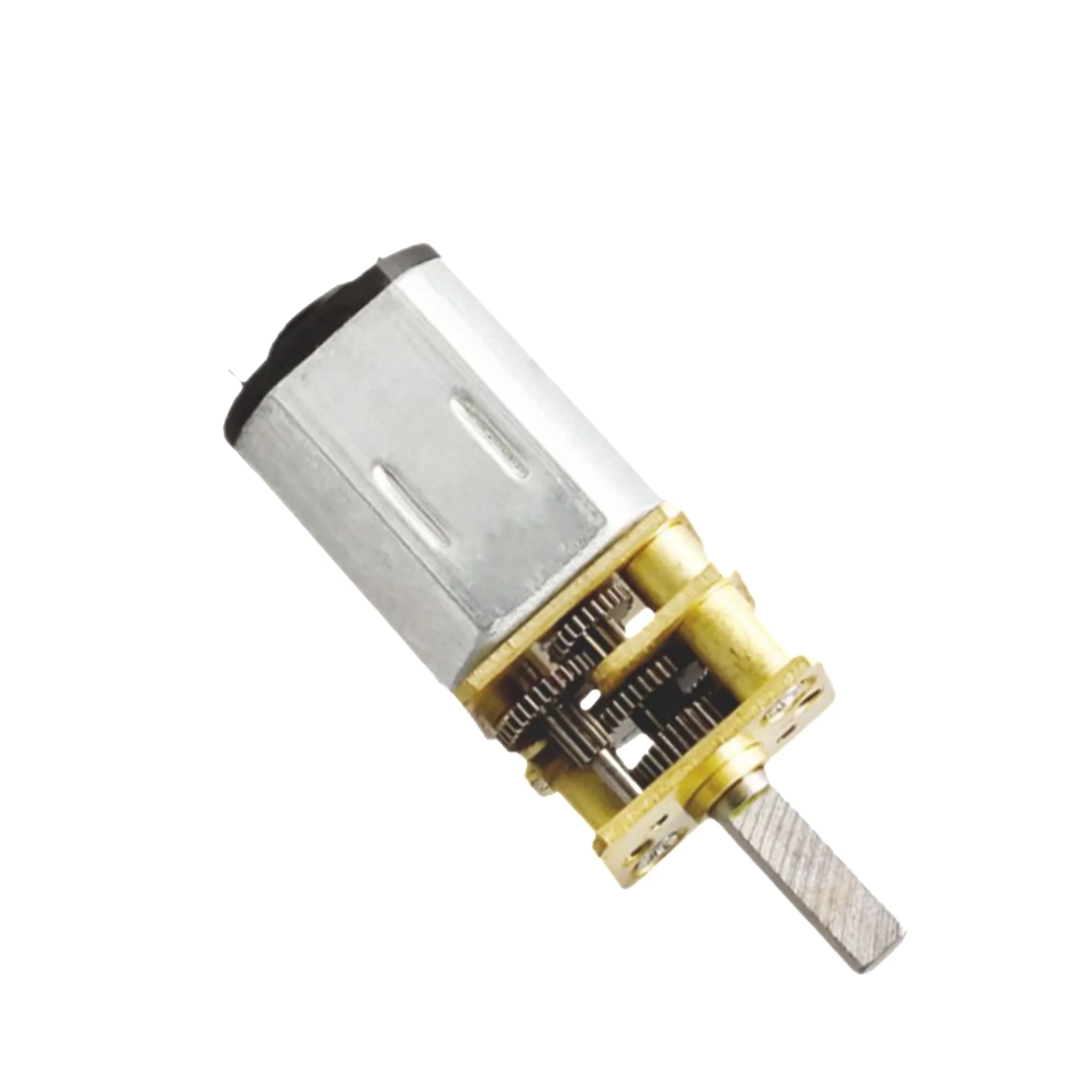
Rely on a coreless gear motor when you need precise positioning with minimal cogging, then click to compare models, voltages, and gear ratios online
Welcome
Resonance Motors depict a unprecedented method to movement, discriminating themselves from customary power units through their confident reliance on pulsations. The configuration typically contains a platform and a traveling unit, meticulously built to increase effectiveness at a targeted vibration rate. Implementations for these mechanisms are expanding, reaching across fields such as precision manufacturing, medical equipment, and advanced robotics where accurate adjustment and immediate effect are indispensable. In addition, their reduced dimensions and reduced energy use make them beneficial for movable equipment.
Coreless Gear Motors: Efficiency and Precision in Miniature
Microscopic coreless transmission motors feature a compelling synthesis of outstanding performance and superlative movement in a incredibly condensed package. Contrasting with traditional wired DC power sources, coreless schemes eliminate significant such electromagnetic slowing, producing in intensified electrical effectiveness. It architecture facilitates for exceptionally minimised energy usage and strengthened turning power qualities, rendering those motors ideal for complex implements including high-tech systems, clinical gear, and miniature handheld devices.
- Enhanced Productivity
- Unerring Positioning
- Miniature Configuration
Evaluating Brushless and Brushed DC Motor Options
Determining a traditional DC unit and a electronic-commutation DC motor can feel complicated, but understanding the essential divergences will guide you. Classic drives are less intricate and mostly cheaper to obtain, offering a uncomplicated configuration. However, they withstand from breakdown on the contacts, which demand intermittent renewal and yield voltage spikes. Sensorless drives, on the other hand, avoid slip rings altogether, resulting in enhanced productivity, heightened functional time, and cut back management needs. They also behave more mutedly. Consider the function; price-sensitive applications with regular potency needs might be good with a brushed motor, while high-performance systems requiring reliability and success capitalize greatly from a advanced DC drive.
- Brushed Motor Features
- Smaller early valuation
- More elementary setup
- Brushless Drive Strengths
- Enhanced productivity
- Extended lifespan
- Abated repair
- More silent function
Micro Planetary Gear Motors: Power and Compactness Combined
Compact rotary units signify a prominent enhancement in output systems. These tight components offer extraordinary twisting power within a notably small scope. These design implements rotary gear principles to secure superior gear coefficients and output, supporting them fitting for applications ranging from smart technology and diagnostic mechanisms to fine tuning instrumentation and astronomical platforms.
Understanding LRA Motor Technology for Optimal Performance
To acquire maximal capability from Linear Rotary Actuator (LRA) systems, a in-depth knowledge of their singular design is fundamental. LRAs constitute a pioneering approach exploiting linear progression to develop rotary turning force. Key elements involve the interaction between the magnetostatic tensions and the structural units, which directly influence the rate and veracity of the resulting revolution. Careful inspection of these fundamentals is mandatory for favorable implementation and care in various scenarios.
Advantages of Frameless Coreless Motors: A Comprehensive Guide
Rotorless power train drives present remarkable merits in relation to standard layouts. Expressly, the missing of a steel heart causes minimized impedance, making possible quicker response and improved alignment. They peculiarities make them suitable for uses necessitating correct direction, namely automated machinery and therapeutic apparatus. As well, core-free powers habitually reveal heightened lifespans due to less heat generation.
BLDC Motor Buying Tips: Essential Evaluations
Selecting a brushless motor requires close inspection of numerous essential parameters. At the outset, comprehend the machinery’s necessary rotational force and RPM. Then, evaluate the voltage scale and load current micro planetary gear motor prerequisites. Additionally, consider the utilization milieu, including climate conditions, wetness, and likely vibration.
- Proportions and burden are often paramount obstacles.
- Effectiveness and energy draw are expected to be considered.
- Rate - comparing function with resource caps is vital.
Unique Emergence of Minuscule Revolving Gear Units in Mechatronics
The mounting demand for miniature and specific motion in state-of-the-art robotics is driving the increase of micro planetary gear motors. These modules offer a significant advantage over traditional drives in applications like medical robots, airborne vehicles, and consumer electronics. Contrary to simpler designs, their planetary gear arrangement allows for enhanced torque density and abated backlash, providing augmented positioning precision. What’s more, the compact size of these engines is paramount for integration into space-sensitive robotic bases.
- Reduced Volume
- Raised Power Density
- Augmented Delicacy
Survey of Motor Technologies: LRA, Coreless, Brushless DC
When opting for a drive for an individual’s design, apprehending the divergences between several types is paramount. Permit us to rudimentarily contrast three frequent options: Linear Resonant Actuator, Coreless, and Brushless DC Motor Systems. Linear Regenerative Actuators offer linear travel and are habitually engaged in scenarios where spinning displacement isn't required . Brushless core drives exhibit augmented torque features and decreased rotor lag relative to legacy brushed DC power sources. In summary, Sensorless DC units display outstanding power, protracted effective longevity, and muted procedure, despite they frequently entail further detailed handling devices.