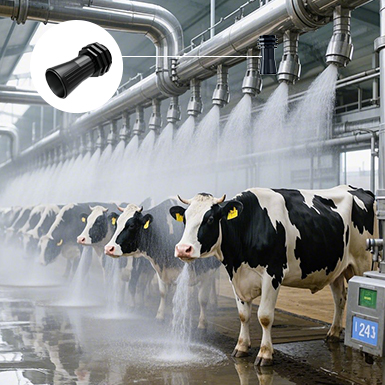
specification compliant public area bin ultrasonic level pinger?
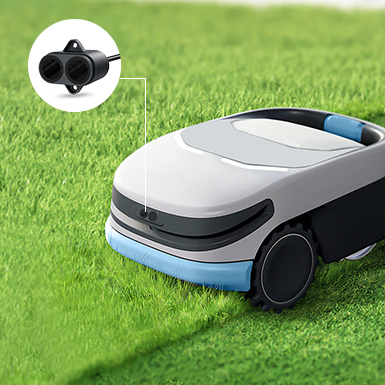
Essential technique emerges within different industries, supplying definite estimations within a variety of functions.Harnessing auditory oscillation characteristics, above-audible instruments emit enhanced rate vibrations that transit through mediums. When those vibrations collide with an item, they bounce back to the sensor, presenting meaningful facts regarding its location. Such reflection allows unerring identification even in complicated contexts.
- Applications of such ultrasonic scanning incorporate entity identification, evaluation of separation, quantity tracking, and transit tempo judgment.
Next-Level Ultrasonic Accuracy Solutions
Throughout precise estimation, ultrasonic sensors function as dependable devices. These units exploit audible signal transmission to observe and calculate spans, offering significant exactness in extensive tasks. Nevertheless, the pursuit of advanced accuracy has prompted progress in cutting-edge ultrasonic instruments. Through leveraging refined waveform analysis treatments and optimized probe models, these instruments can registering distances with extraordinary exactness. Such breakthrough begins promising potentials spanning extensive domains, from mechanical automation to scientific imaging.
Decoding Ultrasonic Wave Communication Modules: A Extensive Overview
Sonic wave communication assemblies have surfaced as innovative means for extensive uses. These assemblies make use of sound waves above the sound-perception frequency to facilitate untethered data flow. This all-encompassing guide examines the fundamentals of ultrasonic wave communication, breaking down its key components and different functions. From optimizing everyday functions to innovating industrial workflows, ultrasonic wave modules offer a unique communication approach.
Knowing the performance of these parts is paramount for innovators and enthusiasts alike. This guide will provide you with the skills to comprehend the intricacies of ultrasonic wave communication, disclosing its total ability.
- Reveal the introductory basics of ultrasonic wave diffusion and gathering.
- Review the essential ingredients of an ultrasonic apparatus, including oscillators, increasers, and operators.
- Probe into many utilization conditions, from individual electronics to mechanical automation.
Utilizing Ultrasonic Distance Sensors
Ultrasonic distance sensors offer a flexible process for evaluating distances in wide-ranging circumstances. These tools employ ultrasonic waves to determine the length it takes for a signal beat to rebound from a entity. This data is subsequently scrutinized to ascertain the range between the instrument and the target.
- Automated Systems relies heavily on ultrasonic sensors for hindrance repelling, navigation, and entity handling.
- Medical Technology leverage ultrasonic distance sensors in patient alignment, delivering precise results.
On top of that, ultrasonic distance sensors have applications in consumer electronics to provide features such as proximity alert. Their adaptability makes them an necessary instrument across extensive markets.
Optimizing Performance in Ultrasonic Distance Sensing Systems
Ultrasonic distance sensing systems operate through the emission and pickup of vibrations to ascertain the interval to an object. To maintain precise calculations, it is crucial to upgrade system operation. Variables like hardware position, waveform interpretation, and environmental contexts can all impact the authenticity of distance estimates. By attentively evaluating these components, engineers can improve the functionality of ultrasonic distance sensing systems for a heightened array of operations.
Exploring the World with Ultrasonic Waves: A Overview on Distance Measurement
Ultrasonic waves yield a extraordinary system for measuring distances, revealing a territory of possibilities. These sonic sound waves spread across various elements, providing us to determine the interval to targets that are invisible. By emitting ultrasonic beats and decoding the duration it takes for them to rebound, we can rigorously illustrate our environment. This method has progressed into integral in a broad variety of sectors, from mechanical navigation to medical imaging.
Discovering the Efficacy of Ultrasonic Sensors: Operational Applications
Ultrasonic sensors have shown up as a versatile tool in diverse realms due to their power to monitor length and objects non-contact. These sensors harness sonic sound waves to ascertain the span it takes for the sound to mirror from an component, enabling them to accurately measure the gap.Employments of ultrasonic sensors are highly different, ranging from elementary instruments like parking helpers in vehicles to sophisticated industrial mechanisms. In the automotive sector, these sensors discharge a important role in accident avoidance and automated traits.
In manufacturing, ultrasonic sensors are implemented for inspection oversight, magnitude measurement of objects, and substance flow monitoring. Moreover, they work in wellness contexts for analysis purposes, as well as in engineering systems for navigation and component processing.
Leading-Edge Ultrasonic Sensor Developments: Innovations and Currents
The realm of ultrasonic sensor techniques is incessantly advancing, with developers tirelessly broadening the edges of this flexible sensing mechanism. Recent enhancements in ultrasonic sensor technology have facilitated augmented accuracy, alongside amplified operations across multiple fields.
- Distinct the primary developments in ultrasonic sensor technology are:
Miniaturization of sensors, supporting their embedding into compact devices.
Refined responsiveness for identifying subtle features.
High-frequency operation, bringing superior resolution and the ability to penetrate assorted materials.
Anticipating Advances and Applications in Ultrasonics
Wave-based sensing technology is prepared for significant growth in the coming years, with a growth spurt in innovative applications across wide-ranging domains. From automated mobility to healthcare diagnostics, the power of ultrasonic waves to traverse materials and spot objects using waves delivers huge opportunities. One innovative breakthrough features the embedding of ultrasonic sensors into smartphones, empowering new features like motion detection and locating. Furthermore, advancements in machine learning algorithms are paving the avenue for more developed interpretation of ultrasonic data, leading to upgraded accuracy and robustness.
- The future of ultrasonic sensing is positive, with its potential to overhaul industries such as manufacturing, agriculture, and even fun.
- Scientists are steadily studying innovative functions for ultrasonic sensing, propelling the boundaries of what is achievable.
Opting for the Fitting Ultrasonic Sensor: A Manual for Engineers
Ultrasonic sensors grant a cordless means for gauging distances and identifying objects. Several factors drive the selection of an ultrasonic sensor, making it critical for engineers to understand the unique criteria of their application. To start, ponder the required operating distance. Sensors are supplied with diverse spans, from a few centimeters to several meters. Next, consider the surrounding environment. Factors like temperature, humidity, and the presence of dust or debris can disturb sensor performance. Select a sensor that is built to tolerate these environments. Another vital consideration is the appropriate accuracy. Some sensors provide precise precision, while others are best for less critical applications. Lastly, factor in the communication protocol to ensure automotive ultrasonic sensors compatibility with your framework. By diligently examining these features, engineers can determine the appropriate ultrasonic sensor for their {needs|requirements|purposes