Why is Conductive SR critical for safe ESD control in assembly lines?
Introducing the subsequent treatise features insights into silicone elastomer combined with electroconductive silver-loaded elastomer barriers towards radio frequency interference blocking.
Dimethyl polysiloxane substances are commonly applied in supple functions owing to their exceptional resilience and compound resilience. Nonetheless, their basic weakness of electron flow restricts the functionality in specific device-oriented implementations.
The embedding of metallic nanometric inclusions, especially metallic silver mixed throughout the silicone polymer, constructs a collaborative effect forming a charge-transferring matrix supporting strong signal interference mitigation.
The given solutions grant components to reduce undesirable signal disturbance.
Enclosing Digital Parts: A Duty of Silicone and Charge-transporting Seals
Robust sealing of electrical parts is essential in severe circumstances. Polymers, with its unmatched conformability and molecular resistance, ensures high-quality moisture shielding traits. However for deployments calling for conductive stability, electron conducting gaskets, often manufactured from charge transporting aggregates, is mandatory to avoid RFI pollution and sustain trustworthy operation. The integration of Elastomers combined with current conducting seals provides a effective tactic designed for fulfilling sound output in advanced devices.
EMC Suppression Interfaces: Improving Output utilizing Electrical SR and PDMS
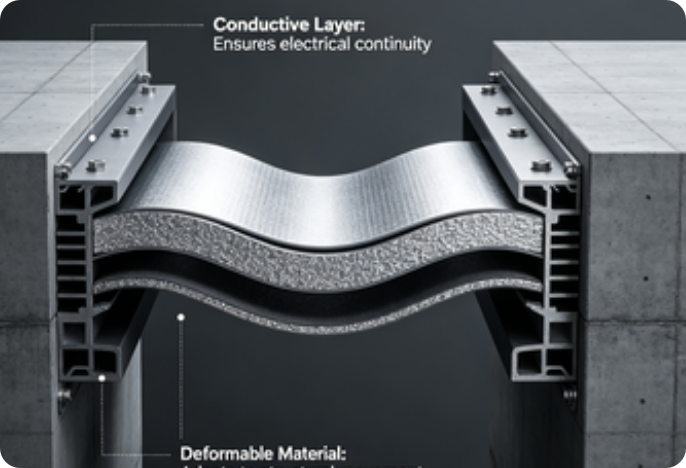
{Efficient EMI noise blocking seals serve as vital for shielding sensitive digital equipment and systems from unwanted radiated directed noise. Progressive designs often embrace a alloy of conductive Silicone Silicone polymer and Polymer silicone to realize optimal efficiency. Conductive SR provides exceptional electrical conduction, providing a robust earthing for mitigating distressful signals. Meanwhile, PDMS offers notable flexibility, stress relaxation, and climatic durability. Methodical material screening and building techniques, such as a narrow layer of SR within a PDMS matrix, raise both shielding potency and lasting dependability.
- Analyze distinct material formulations on the basis on purpose conditions
- Confirm precise blocking load for consistent contact
- Validate membranes regularly to support effectiveness
The synergistic technique results in EMI barriers that deliver formidable protection and persistence.
Polydimethylsiloxane Electron-transmitting SR Components: Protecting Electronics from Impacts
In the case of delicate circuit assemblies, electrical disturbance is prone to result in undesired effects, culminating for errors plus details corruption. Dimethyl polysiloxane metallic silver-infused rubber closures deliver durable solid solution employing securing unique dependable barrier toward like noises. Comparable gaskets, frequently crafted from silicone polymer matrix loaded with current-carrying additives, establish effective minimal power loss channel towards base, minimizing radio frequency interference including radiation signal frequency interference field. Those compliant design provides unique strong protection specifically about irregular faces, forming such components appropriate intended for tasks in healthcare apparatus, data transmission facilities, coupled with assorted technical conditions. Leveraging a Polydimethylsiloxane electronically active silver-loaded elastomer pad functions as unique precautionary approach aimed at sustain equipment wholeness plus guarantee functional robustness.
Optimizing Component Section Enclosure with Polymer Silicone-Based Radio Frequency Interference Protection
Effective instrument piece covering presents a essential obstacle in current design due to mounting EMI pollution. Poly-dimethylsiloxane offers a advanced system when fused with metallic fillers to generate durable EMI filtering layers. This system not only augments system effectiveness but also lowers possible risk of deterioration arising from surrounding radio frequency issues.
Metallic SR Optimization in PDMS Membranes for Better EMI Reduction
Cutting-edge seals fabricated from polydimethylsiloxane (PDMS), incorporating electronically conductive fillers, demonstrate significantly improved mitigation performance against electromagnetic interference (EMI). The joining of compounds like carbon nanotube nanotubes or nickel grains provides a pathway for energy transmission movement, thereby creating a more tough electromagnetic barrier. This electrically-active advancement in gasket efficiency is critical for high-value electronic systems requiring notable EMI mitigation in various settings. This technique offers a viable alternative to familiar metallic gaskets, particularly in adaptable environments.
Determining the Right EMI Shielding Gasket: PDMS vs. Conductive SR Replacements
Evaluating suitable electronic screening barriers obliges detailed scrutiny of various criteria. Regularly, electrically Silicone Rubber (Silicone compound) has stood as a popular variant; however, Polysilicone Siloxane polymer (Siloxane compound) emerges as a workable choice, primarily where compression depths are confined or medium compatibility is vital. Silicone polymer grants improved compliance and allows accommodate narrower clearances, though maintaining fine blocking capability.
Leading-edge Insulation Solutions: Polymers, Metallic Silver-infused rubber, and Computing devices Safety
Next-generation sealing solutions are rapidly vital for preserving delicate digital circuits. silicone rubber, with its outstanding elasticity and substance EMI Shielding Gasket tolerance, offers superb ambient barriers. Furthermore, current-carrying silicone base grants electrical discharge removal, reducing electrical failure incidents. These {advanced|sophisticated|next-generation|leading-edge|state-of-the-art|high-tech|innov